

Camp Covered: A Guide to Choosing Your Perfect Tent
Backpacking, bikepacking, and base/car camping — each demands different features. Let’s break it down.
Backpacking Tents
Three-Season vs. Four-Season
A four-season tent is built to withstand extreme weather — heavy snow, high winds, and cold temperatures — with stronger poles and less mesh. A three-season tent is lighter, more ventilated, and ideal for mild spring, summer, and fall conditions. But, like ultralight tents, four-season tents use premium materials, making them more expensive.
Why Ultralight?
On multi-day backcountry expeditions, minimizing weight and bulk is key. But that ultralight advantage often comes with a higher price tag due to advanced, costly materials. Take a look at this comparison:
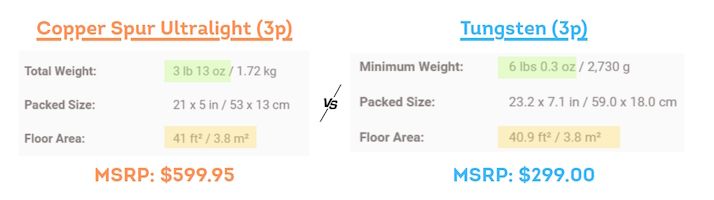
Both tents offer the same floor area, but the Copper Spur weighs nearly half as much as the Tungsten and packs down smaller. Both are excellent options, but in the world of backpacking tents, weight and size drive the price.
Copper Spur Ultralight
The Ultimate 3-season, Freestanding, Ultralight Backpacking Tent
Hubba Hubba Ultralight
Ultralight, durable, comfortable , fast-setup
Bikepacking Tents
Designed specifically for two-wheeled adventures.
Bikepacks are designed to securely attach to bike handlebars, offering compact, lightweight storage for multi-day rides. They distribute weight evenly, reduce strain on the rider, and keep gear accessible without the bulk of traditional panniers or backpacks.
Base/Car Camping Tents
Spacious, simple setups for the ultimate campout.
Designed for comfort, not weight, these tents are roomy, feature-packed, and perfect for short hauls from the car to the campsite.
Bunk House
The 3-season, Freestanding Car Camping Tent With a Spacious Front Vestibule


